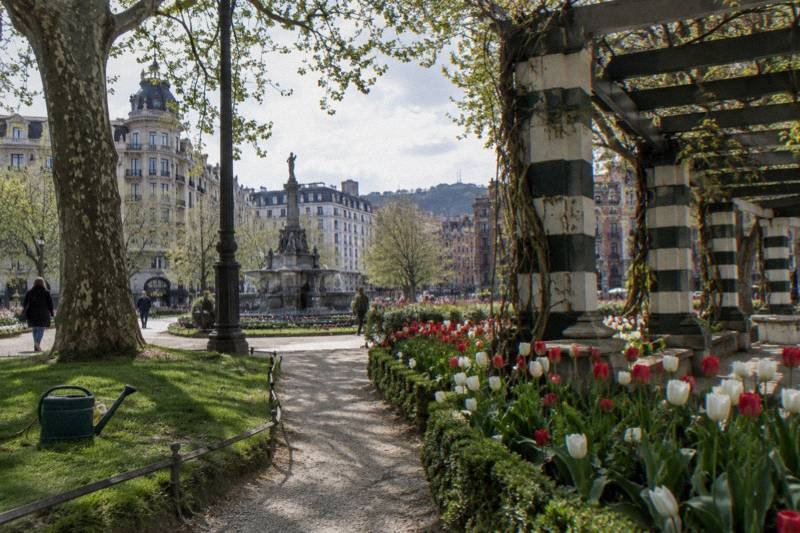
Is The Mercado De La Ribera Free To Enter?
Yes, the Mercado de la Ribera is free to walk through. What costs money inside, what you can see without buying, and the free GuruWalk and freetour.com walks that meet close by.
In Short
Yes. The Mercado de la Ribera is free to enter, always, as a public market hall. Entry costs nothing, browsing costs nothing, and the riverside outside is public space. Everything you buy inside is paid: pintxos, drinks, produce and anything at the bars. Pintxos are not free and no reliable price figure exists for them, so budget for food and treat the visit itself as the free part.
This question sits inside the Mercado de la Ribera free visit guide.
Quick Facts
| Question | Answer |
|---|---|
| Is entry free? | Yes, always, as a public market hall |
| What is paid inside? | All food and drink: pintxos, bars, produce |
| Is there a pintxo price to quote? | Pintxos are simply paid, price set per bar |
| Where is it? | Casco Viejo, on the Nervion ria riverside |
| Nearest free walk platform | GuruWalk, with several walks meeting at Plaza Arriaga |
| One walk meets at the market itself | Unfiltered Stories, 2 Hours 15, listed on freetour.com |
Is The Mercado De La Ribera Free To Enter?
Yes, the Mercado de la Ribera is free to enter. The hall is a public market and walking through it costs nothing at any time it is open, with no ticket, no minimum purchase and no entry desk. Browsing the stalls, looking at the produce displays and stepping back out onto the riverside are all free. The only money you spend inside is on whatever you choose to buy, and pintxos and drinks are paid items with no free element.
That is the whole answer, but the details around it are where the confusion usually starts, because the market sits inside a city that splits neatly into free public space and paid interior experiences. The Mercado de la Ribera belongs firmly to the first group. It is a working market hall on the Nervion ria, at the edge of the Casco Viejo, and it functions as public commercial space in the same way a municipal market does anywhere in Spain. You do not pay to walk in. You do not need to be buying anything. Nobody will ask what you are doing there.
The market's position helps explain why the question comes up so often. It sits on the river, beside the Siete Calles, the historic street grid of the old town, and it appears on nearly every Bilbao itinerary as a food highlight. When people read "market" next to "Guggenheim" and "funicular" in the same list, they start to wonder which of these things charges an entry fee. The Guggenheim galleries charge 15 euros for adults. The funicular to Artxanda charges 3.50 euros one way or 6 euros return. The Mercado de la Ribera charges nothing, and that contrast is worth holding in your head as you plan a day, because it means the market is one of the few headline Bilbao sights where the door is simply open.
The city's own tourism information treats the market as a public venue rather than a ticketed attraction, listed among the free things to see in the old town alongside the Siete Calles, Plaza Nueva and the riverside promenade, and Bilbao's municipal pages describe the city's public market spaces in exactly those terms (bilbao.eus). There is no timed entry, no capacity ticket and no separate rate for tourists. That makes it different from almost every museum within a fifteen minute radius of its doors, several of which are free only on specific days or for specific groups, a distinction covered in detail in the Bilbao free museum days guide.
One practical note: free entry does not mean the market is open around the clock. It is a working hall, and like any working hall it keeps market hours, with stalls trading during the day and the bars serving into the evening. Those hours are set by the market's own operators and can shift with seasons and holidays, so if your plan depends on being there at a specific time, confirm the current opening hours before you set out rather than relying on a figure copied from an old article.
What Can You See Without Buying?
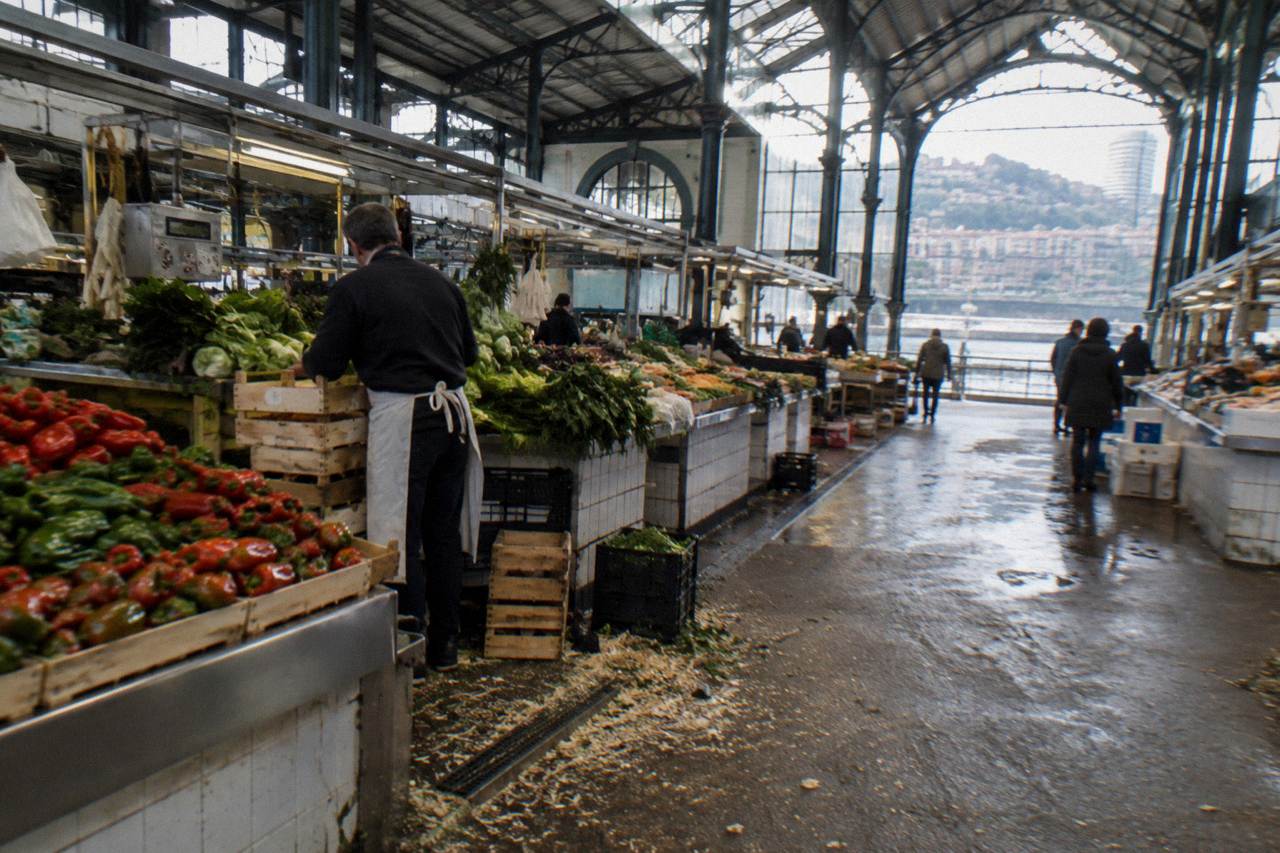
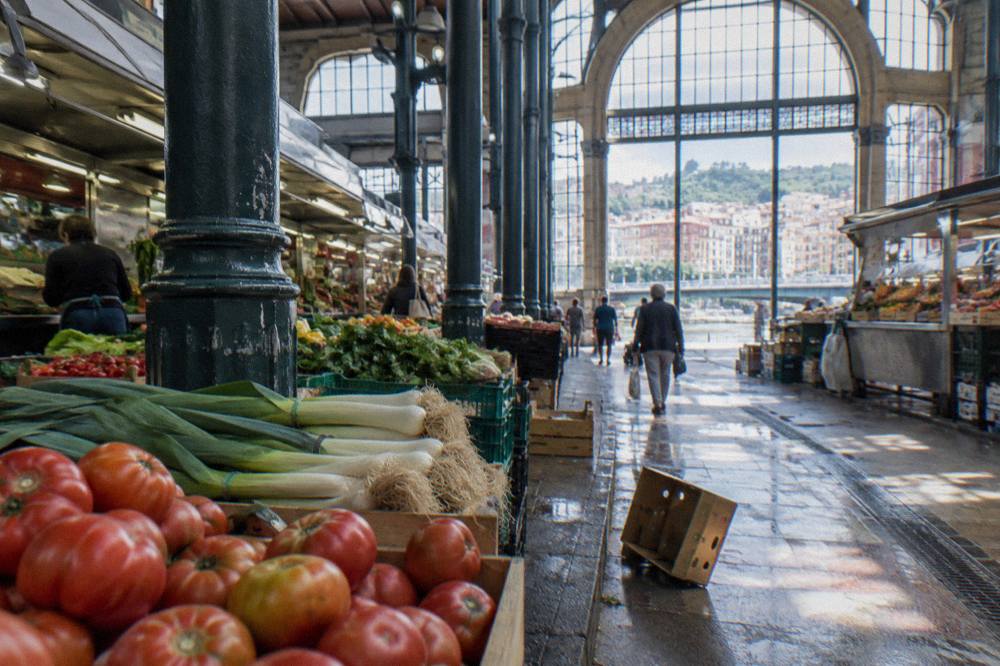
You can see the full length of the hall, the produce displays, the stall fronts and the riverside setting without spending anything. The building's interior is publicly viewable from the floor, the fish, meat and produce sections are laid out in open view, and the exterior, with the Nervion ria running past the doors, is public space at all hours. Photography costs nothing, and no stall expects a purchase for looking.
Start with the building itself. The hall occupies a prominent riverside plot at the eastern edge of the Casco Viejo, and its form is best appreciated in two passes: one along the river outside, where the whole facade reads against the water, and one through the interior, where the stalls are arranged under the roof in the traditional market sections. Neither pass requires money. The riverside walk that runs past the market is a public promenade, part of the same network of free riverside paths described in the Abandoibarra and the ria riverside walk guide, and you can walk it in either direction without ever crossing a till.
Inside, treat the market as a free gallery of Basque food culture. The stall displays themselves are the sight: fish laid out on ice, produce stacked by colour, the bar counters of the pintxo stands running through the hall. There is no awkwardness in walking the aisles without buying, because the market's daily foot traffic includes plenty of people passing through, and the hall functions as a route as much as a destination for locals moving around the edge of the old town. That through-traffic is also why the market works as a landmark to get your bearings by: it anchors one end of the Siete Calles area, and the free walk through the Casco Viejo and the Siete Calles starts, for many people, from the river side and works inward.
If you want the market explained rather than just seen, one free walking tour meets at the market itself: Unfiltered Stories, 2 Hours 15, run by Hugo Benalcazar and Paola and listed on freetour.com, rated 10 out of 10 across 59 reviews shown on its freetour.com listing, a 2 hours 15 minute walk in Spanish. It is free, pay what you want, reserved on freetour.com, and its meeting point is the Mercado de la Ribera itself, which makes it the one guided option where the market is the start rather than a stop you have to find. Every other walk in this article runs on GuruWalk, and the two are separate platforms with separate listings.
Beyond the hall, the free sights around the market cost nothing and connect naturally. The Siete Calles begin steps away. Paseo del Arenal and Plaza Arriaga sit along the river to the west, both public space around the clock. The Zubizuri bridge and the modern riverside toward the Guggenheim are further along the same free promenade, and the Zubizuri and La Salve free bridges guide covers that stretch.
What Costs Money?
Everything consumable costs money inside the market: pintxos, drinks, restaurant plates, produce and any packaged food. Outside the market, nearby paid items include the Cathedral's 10 euro entry, while the Basilica de Begona remains free to enter as a place of worship.
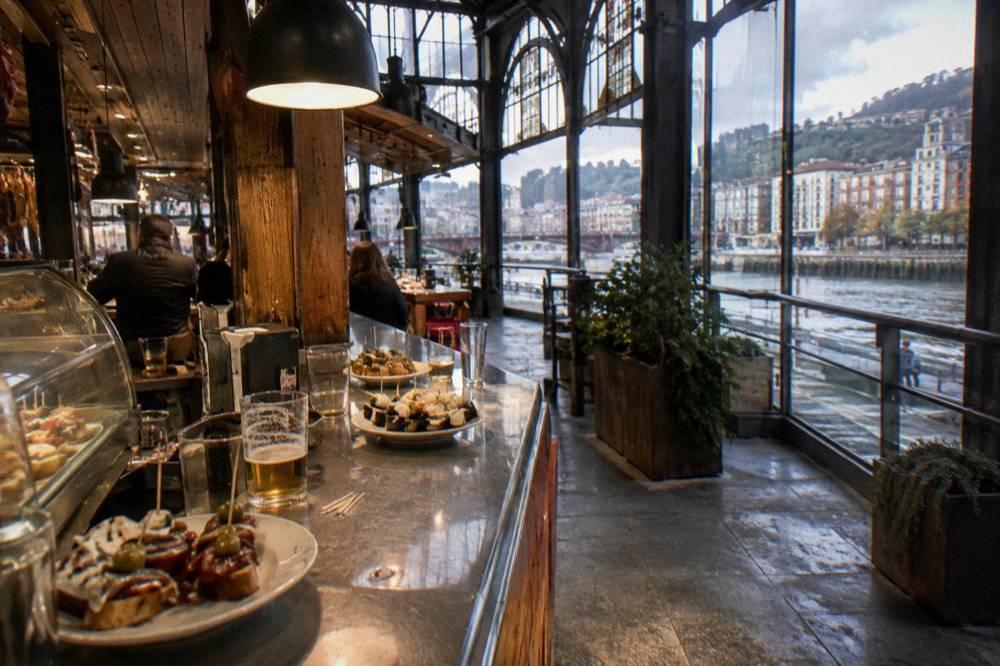
The pintxo question deserves its own clarity, because it is the most common misunderstanding. Pintxos are not free. They are small paid bar food, and the habit of moving between bars eating pintxos is a paid activity with prices set by each bar. No official or operator source publishes a standard pintxo or pintxo-pote price for Bilbao, so any specific figure you read in a travel article is someone's estimate rather than a verifiable fact. What can be said honestly: eating in and around the Mercado de la Ribera costs money, prices vary by bar and by item, and the way to know is to look at the displayed prices at each counter, which bars are required to show.
| Item or nearby sight | Free or paid | Detail |
|---|---|---|
| Market entry | Free | Public hall, always |
| Pintxos and drinks in the market | Paid | Prices set per bar |
| Produce and packaged food | Paid | Standard market purchases |
| Riverside promenade outside | Free | Public walkway, always |
| Siete Calles and Plaza Nueva | Free | Public streets and square |
| Catedral de Santiago | Paid | 10 euros general tourist entry |
| Basilica de Begona | Free | Place of worship; closed to sightseeing during celebrations |
The market's own food economy is the main spend, but the neighbourhood around it mixes free and paid in ways that catch visitors out. The Catedral de Santiago, in the old town a short distance from the market, charges 10 euros for general tourist visits, with reduced rates for over 65s, groups and Camino pilgrims, and free entry only for specific categories such as children 12 to 18, university students up to 25, large families, the unemployed and visitors with a disability of 60 percent or more. It is not a free church, and it should never be budgeted as one. The Basilica de Begona, up the hill from the old town, is the opposite: free to enter as a place of worship, with the condition that it is closed to sightseeing during celebrations and silence is asked inside. The Basilica de Begona and Bilbao churches guide keeps those two straight.
Further afield but on the same mental map, the paid items near the river are well documented. The Guggenheim's galleries cost 15 euros for adults, though the building exterior, Puppy and Maman are free to see, a split the Guggenheim Bilbao free side guide covers in full. The Artxanda funicular costs 3.50 euros one way or 6 euros return, though walking up to the viewpoint is free. None of these is a market cost, but if your day runs from the market along the river to the museum district, they are the figures that will decide what the day actually costs. The market, the old town streets and the riverside between them remain the free spine of that route.
One more paid contrast worth naming, because it sits closest to the market's own offer of guided food culture: Bilbao Turismo, the official tourism body, runs its own guided walking tours of the Casco Viejo and the Ensanche, and these are paid, with one included in the Bizkaia Card. They are a legitimate option but they are not free walks, and they are separate from the pay what you want walks reserved on GuruWalk and freetour.com. On those platforms the walk itself costs nothing and you decide at the end what it was worth.
When Should You Go?
Go during trading hours on a regular weekday for the full market atmosphere of active stalls, or late in the day and outside peak hours for a quieter look at the hall, though more stalls will be closed at that hour. Either way, the choice is between liveliness with the stalls working and calm with fewer of them open, so pick whichever suits.
That answer is deliberately hedged on hours, and the reason is honesty. The market is a commercial hall whose individual stalls and bars set their own rhythm, and opening patterns shift across the week, the season and the holiday calendar. Articles that print a fixed "open daily until late" schedule are guessing. What is not a guess: entry is free at every hour the hall is open, so a morning visit and an evening visit cost the same, nothing, and the only variable is how much of the market is trading when you arrive.
For planning purposes, think in terms of what each part of the day gives you. A morning visit aligns with the working market, when produce, fish and meat stalls are at their fullest and the hall is doing its actual job of feeding the neighbourhood. That is the version photographers and first time visitors usually want. An evening visit shifts the balance toward the bars and the pintxo stands, which is the paid side of the market and, for many people, the reason they came. The free constant is the hall and the river outside, both available across the whole span of the day.
The season matters less than you might expect, because the market is an indoor hall, but the calendar around it changes the neighbourhood. Aste Nagusia, Bilbao's main festival, ran from 22 to 30 August 2026 and filled the riverside and the Arenal with free public events, most of the concerts, parades and fireworks costing nothing. Toward the end of the year, the Christmas lights and the Christmas market are expected back, with the lights free to view, though the reported dates remain unconfirmed and the market stalls, ice rink and slide are all paid with no published prices. None of that changes the Mercado de la Ribera's own entry, which stays free through all of it, but it changes what the streets around it feel like.
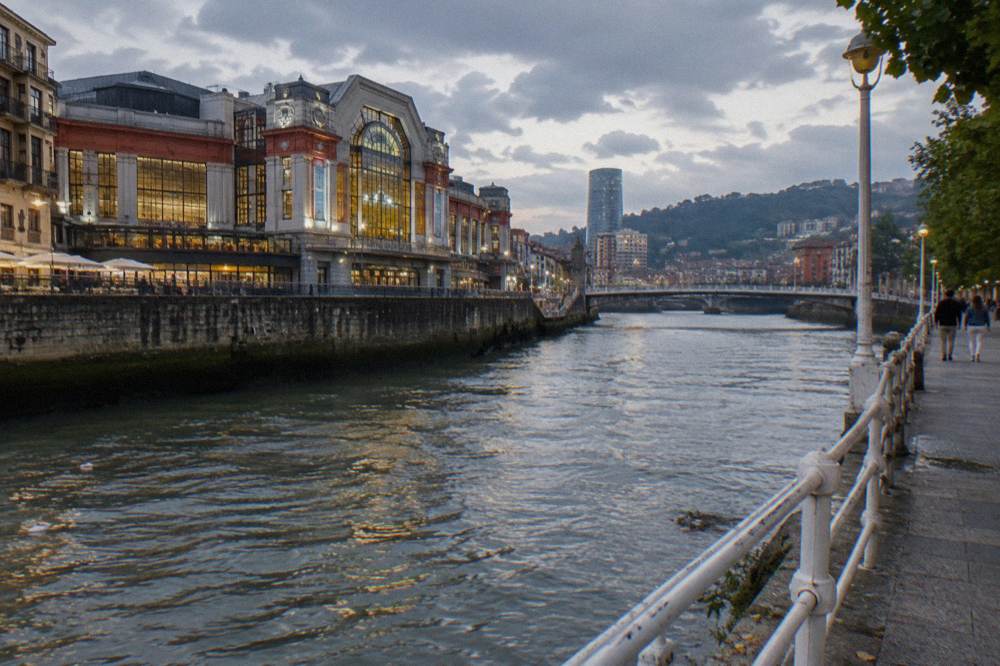
A practical pairing: combine the market with one of the free walks that meet nearby, and let the walk's schedule shape your timing rather than the market's. Walks on GuruWalk and freetour.com list their own departure details on their own pages, and those details, not this article, are what you should check before committing to a day plan. Meeting points in the old town cluster around public landmarks, and the market's riverside position makes it a natural place to be before or after any of them.
Which Free Walking Tours Pass Nearby?
Several free, pay what you want walking tours meet in or beside the Casco Viejo, though none describes its route beyond the meeting point. The closest, Unfiltered Stories, 2 Hours 15, meets at the Mercado de la Ribera itself and is listed on freetour.com, while the others, all on GuruWalk, start at Plaza Arriaga, San Nicolas Church or Plaza Miguel de Unamuno. Each must be reserved on its own platform and none carries a price.
Plaza Arriaga is the anchor meeting point for the old town walks, sitting on the river a short walk from the market along the public promenade. The flagship is Basque Free Tours, Old Town, run by Basque Free Tours BILBAO on GuruWalk, rated 4.78 out of 5 across 13,154 GuruWalk reviews across all languages, a 2 hour walk in English and Spanish meeting at Plaza Arriaga, in front of the Arriaga Theatre. It is free, pay what you want, reserved on the guide's GuruWalk page, and no other walk in the city has a review base anywhere near as deep, which makes it a sensible first pick for the old town. For the fuller picture of how these walks work, the free walking tours in Bilbao guide lays out the whole list of walks.
The same plaza, with a different precise spot, serves other GuruWalk walks. Radio Guide Included, 2 Hours 30, run by SPAIN FREE TOURS, is rated 4.64 out of 5 across 1,788 GuruWalk reviews and meets at Plaza Arriaga, in front of the Arriaga Theatre, running 2 hours 30 minutes in English and Spanish with a radio guide as its listing names it. English Local Walk, 2 Hours 30, run by Anglotourismo, rated 4.76 out of 5 across 392 GuruWalk reviews, is an English-language walk meeting at Plaza Arriaga, back facade of the Arriaga Theatre. The Spanish-language options, including Old Quarter Secrets, French Spoken, meeting at San Nicolas Church, main entrance, extend the choice further, and the honest caveat for English speakers is that Bilbao's English-language free walk list of walks is thin: most walks in the city run in Spanish, some with French or Portuguese, so an English visitor's real options are fewer than the full list suggests.
A final pairing worth knowing sits a little away from the river. Noir Dark Secrets, English And Spanish, run by Maite on GuruWalk, is a 2 hour walk meeting at Plaza Miguel de Unamuno, by the fountain, in the heart of the Casco Viejo; it shows 13 GuruWalk reviews with no rating displayed yet, so judge it by its description and language fit rather than by a score. And for the market's own doorstep, the freetour.com listing already named, Unfiltered Stories, 2 Hours 15, remains the only walk whose meeting point is the Mercado de la Ribera itself.
Whether these walks "pass" the market is not something any listing promises, and no published route exists for any of them beyond the meeting point and neighbourhood. What is true and checkable is proximity: the market, Plaza Arriaga, San Nicolas Church and Plaza Miguel de Unamuno all sit in or on the edge of the same old town quarter, so a walk reserved for the morning and a market visit either side of it involve no more walking than the neighbourhood itself demands. Reserve on the walk's own GuruWalk or freetour.com page, turn up at the stated meeting point, and let the guide's own route do the rest.
Mistakes That Trip People Up At The Mercado De La Ribera
The recurring mistakes are treating paid things as free and free things as paid. Assuming pintxos are free samples, budgeting the Cathedral as a free church, expecting a fixed market schedule, paying for an official walk when free, pay what you want walks meet nearby, and assuming every riverside attraction is free like the market: each of these errors is common, and each is avoidable with the splits set out in this article.
The first mistake is the pintxo assumption. Visitors sometimes arrive believing Basque bars hand out free food with drinks. They do not. Pintxos are paid items at every bar in and around the market, and prices are set per bar, so read the displayed prices at each counter before ordering. The market is free; its food culture is not, and confusing the two leads to an uncomfortable surprise at the till.
The second is church confusion. The Catedral de Santiago charges 10 euros for general tourist visits and is not a free entry, while the Basilica de Begona is free as a place of worship with conditions around celebrations and silence. Lumping "Bilbao's churches" into one free category misbudgets the first and undersells the second. The fourth is paying for a Bilbao Turismo guided walk when free, pay what you want alternatives on GuruWalk and freetour.com meet in the same quarter, a comparison the question of whether Bilbao free walking tours are really free answers in detail. The fifth is assuming the market's freeness extends down the river: the Guggenheim galleries at 15 euros, the funicular at 3.50 euros one way and the Vizcaya Bridge walkway at 11 euros are all paid, and the free versus paid Bilbao sights guide draws every one of those lines. Getting the splits right is what turns a vague free day into a real one, and it is the reason Free Things To Do In Bilbao exists as a site at all.
Common Questions On This Topic
Is The Mercado De La Ribera Free To Enter?
Yes, always. The hall is a public market and walking through it costs nothing, with no ticket or minimum purchase. Everything you buy inside, including pintxos and drinks, is paid, and pintxo prices are set per bar, so check them at each counter.
Do You Need To Buy Anything To Look Around?
No. Browsing the stalls, walking the hall and photographing the interior are free, and the market's daily foot traffic includes plenty of people passing through. The riverside promenade outside is public space available at all hours.
Are Pintxos In The Market Free?
No. Pintxos are paid bar food at every counter, with prices set by each bar. No official or operator source publishes a standard pintxo price for Bilbao, so any figure in a travel article is an estimate rather than a fact.
Which Free Tours Meet At Or Near The Market?
Unfiltered Stories, 2 Hours 15, listed on freetour.com and rated 10 out of 10 across 59 reviews shown on its freetour.com listing, meets at the Mercado de la Ribera itself. Other free walks on GuruWalk meet at Plaza Arriaga, San Nicolas Church or Plaza Miguel de Unamuno, all in or beside the Casco Viejo.
Is The Cathedral Near The Market Free Too?
No. The Catedral de Santiago charges 10 euros for general tourist visits, with reduced rates and free entry only for specific categories such as children 12 to 18 and university students up to 25. The Basilica de Begona, by contrast, is free to enter as a place of worship.
When Is The Market Open?
Opening hours are set by the market's own operators and shift with seasons and holidays, so check the Mercado de la Ribera's own page before you go. Entry is free at every hour the hall is open; confirm current hours with the market directly before a timed visit.