Mercado De La Ribera: What A Free Visit Actually Looks Like
Mercado de la Ribera costs nothing to enter and wander. Here is what a free visit includes, what you will pay for, and which free walking tours use the market as a meeting point.
In Short
Yes, Mercado de la Ribera is free to enter, always, as a public market hall. Walking in, browsing the stalls and looking at the building cost nothing. Food, drink and anything you buy from a stall is paid, and pintxos at the market bars are not free. One free walking tour in Bilbao, Unfiltered Stories, meets at the market itself, listed on freetour.com.
Part of the Free Things To Do In Bilbao guides.
Quick Facts
| Question | Answer |
|---|---|
| Is entry free? | Yes, always, entry to the market hall is free |
| What is free inside | Browsing all stalls, the hall itself, the riverside outside |
| What costs money | Pintxos, drinks, produce, anything bought from a stall |
| Pintxo prices | Not free; price set per bar |
| Where is it | Casco Viejo, on the Nervion ria riverside |
| Free walk meeting here | Unfiltered Stories, 2 Hours 15, listed on freetour.com |
| Neighbourhood walks | Old Town walks on GuruWalk meet at Plaza Arriaga |
Is The Mercado De La Ribera Free To Enter?
Yes, Mercado de la Ribera is free to enter, and it always is. The hall is a working public market in the Casco Viejo, and walking in, walking the aisles and looking at the stalls costs nothing at any time it is open. There is no ticket, no door fee and no minimum purchase. The only money you spend inside is whatever you choose to hand over at a stall or bar.
That is the whole deal, and it is worth stating plainly because market halls elsewhere in Europe sometimes charge for tourist entry during peak season. Nothing in the facts on this market suggests any such charge here. The market's status is free, its condition is simply that it is a public market hall, and the paid part is nothing beyond what you buy. The building sits in the Casco Viejo, the historic quarter of Bilbao whose streets and squares are themselves free public space around the clock, which makes the market one of several free things you can string together in the same walk.
The distinction that matters for planning is the line between the hall and what is sold in it. Free gets you the building, the atmosphere and the browsing. It does not get you food or drink. If a pintxo-pote deal or a bar special tempts you, the price is whatever the bar says it is that day.
Market halls in Spain commonly close on some Sundays and public holidays and often pause in the early afternoon, but rather than repeat a guess, treat the hours as something to confirm locally or on the city's own listings before you build a day around them. The free-entry fact does not change with the hours; it only means an arrival outside opening time meets a closed door.
For context on how the market fits a free day out, the surrounding quarter costs nothing either. The Casco Viejo and the Siete Calles free guide covers the streets that run into the market's doorstep, and the Abandoibarra and the ria riverside walk picks up the water on the market's flank. Between the three, you can spend a full morning in Bilbao without a ticket anywhere.
What Is There To See Without Buying Anything?
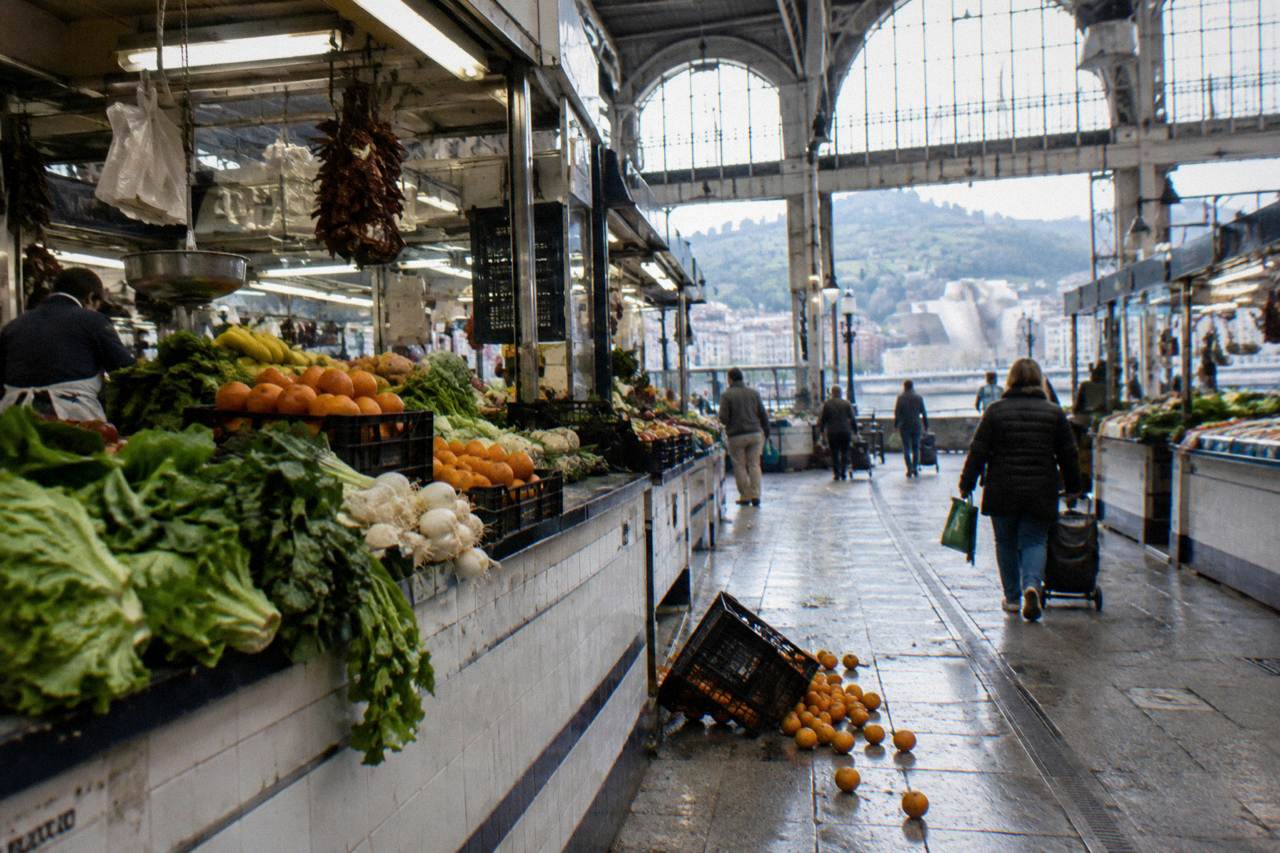
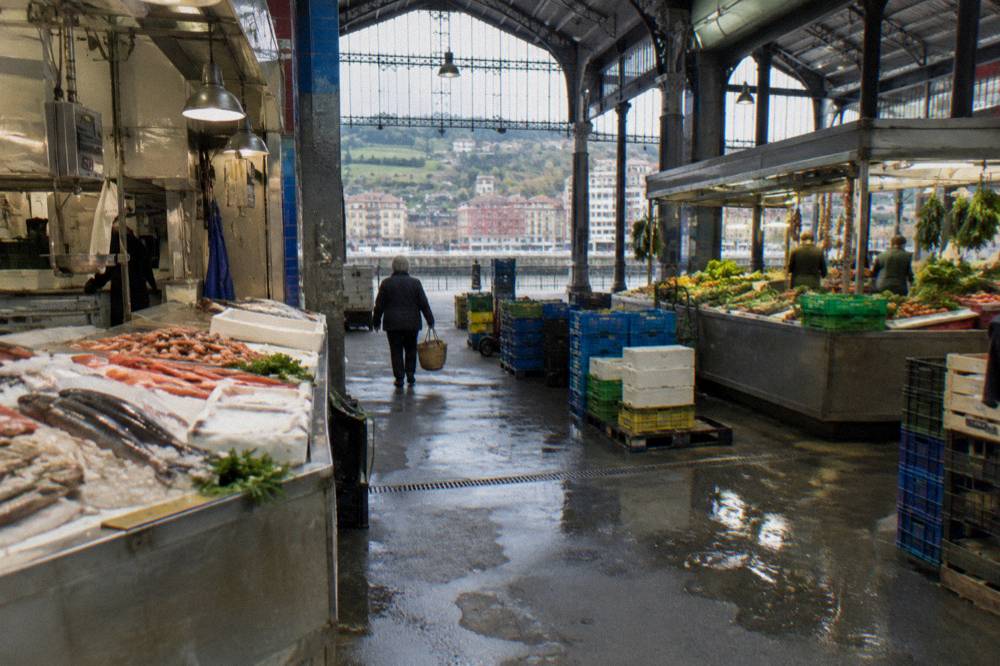
Plenty: the market hall itself is the sight. Entry is free, and the interior, the stall fronts, the produce displays and the riverside setting outside all cost nothing to look at. You can walk the full length of the aisles, see the fish, produce and specialty stalls arranged by section, and step back out to the Nervion ria without spending anything. It is a working market, so the spectacle is real commerce, not a staged attraction.
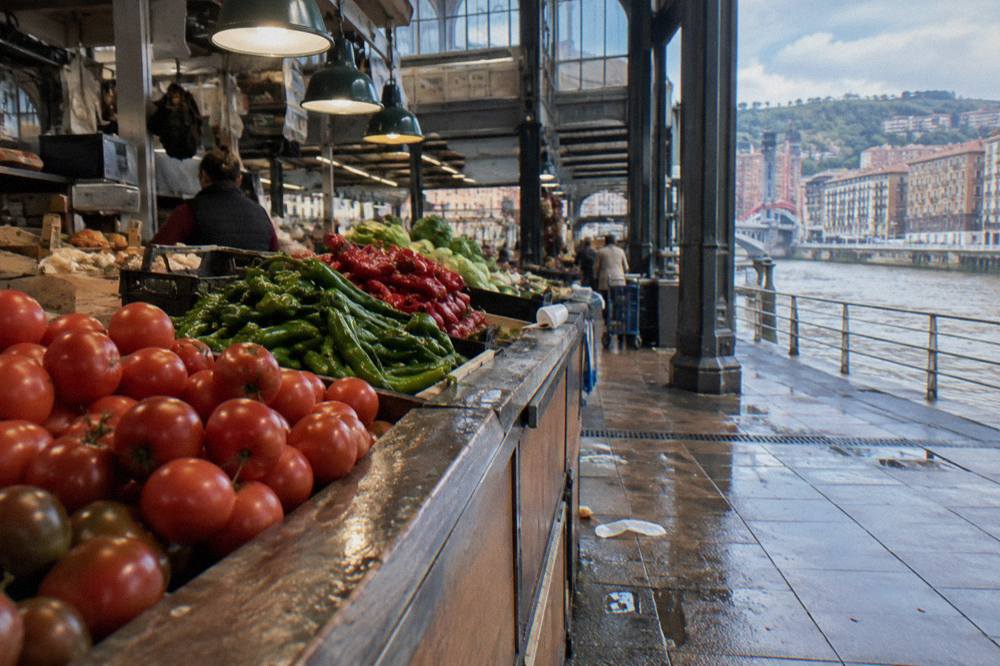
Start with the building. Mercado de la Ribera sits right on the river, and the hall is large enough that its interior is a destination in its own right. Browsers are normal here; a market survives on foot traffic, and nobody expects you to buy from every stall you photograph. The produce sections do the visual work that a museum would charge for: stacked fruit, iced fish, hanging meats and breads, all arranged to sell, which is exactly what makes them worth seeing.
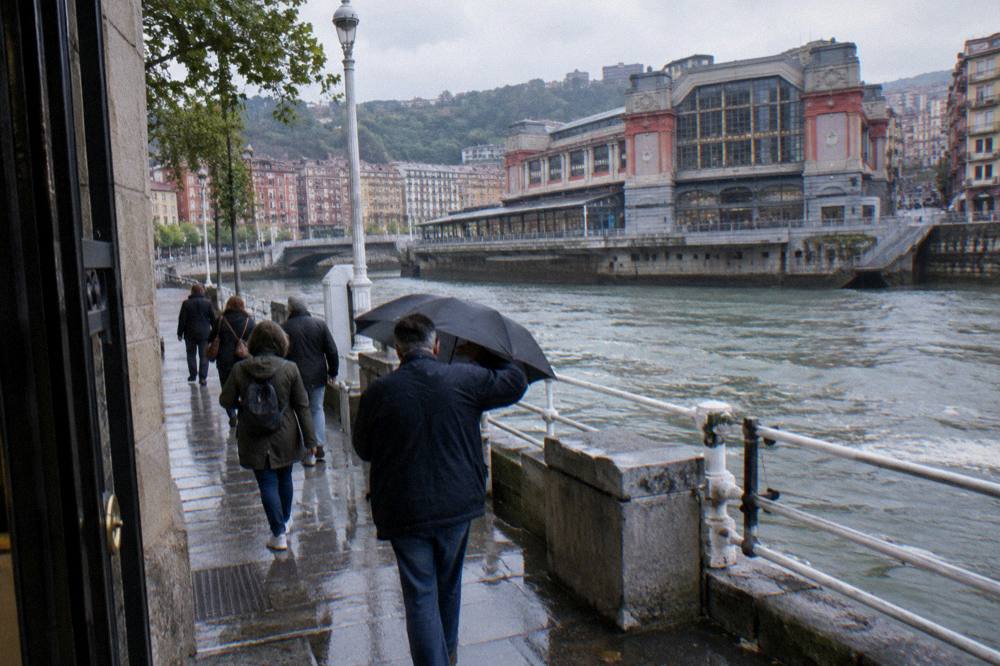
The riverside outside is the second free layer. The market's position on the Nervion ria means the Paseo del Arenal and the riverside paths run directly past it, all public, all free, always. You can leave the market, walk the water's edge, and look back at the hall from across the ria without paying a centimo. This pairing, market hall plus riverside, is one of the better free combinations in the old quarter because both halves are genuinely free rather than free-with-conditions.
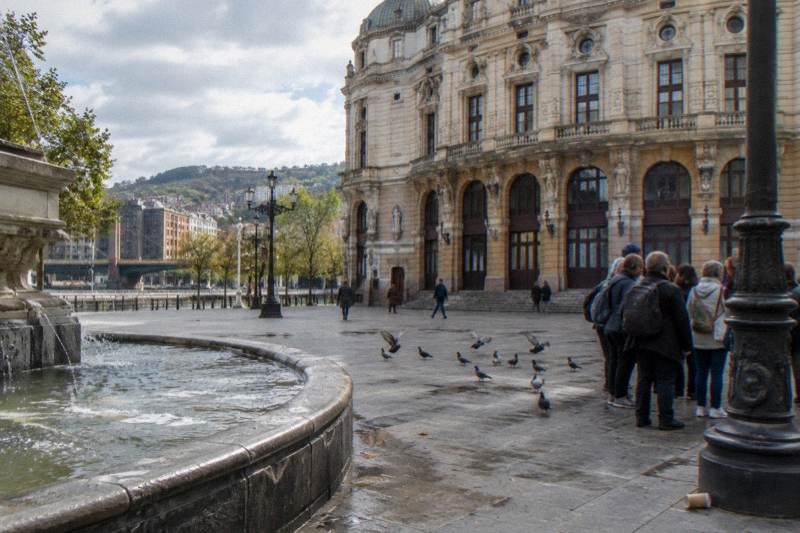
Two nearby squares round out a free circuit. Plaza Nueva, an arcaded square in the Casco Viejo, is free public space around the clock, and Plaza Arriaga, in front of the Arriaga Theatre, is likewise open to all. Both are within the same quarter as the market, part of the same walkable historic core whose streets never close and never charge. A loop of market, riverside and squares is a complete free morning assembled entirely from public space.
If you want structure rather than self-guiding, the free walking tours cover the neighbourhood, though you should know exactly where each one starts. The flagship Old Town walk, Basque Free Tours, Old Town, runs 2 hours in English and Spanish, is rated 4.78 out of 5 across 13,154 GuruWalk reviews, and meets at Plaza Arriaga, in front of the Arriaga Theatre, rather than at the market itself. Its GuruWalk page for this walk lists the meeting point and current availability. It is free, pay what you want, like every walk among the 18 free walking tours across GuruWalk and freetour.com.
What Costs Money At The Market?
Everything you consume: pintxos, drinks, produce and any stall purchase. Entry is free, but the market's business is selling food, and no part of the menu is complimentary. The same goes for drinks, takeaway produce and any specialty goods on the stalls.
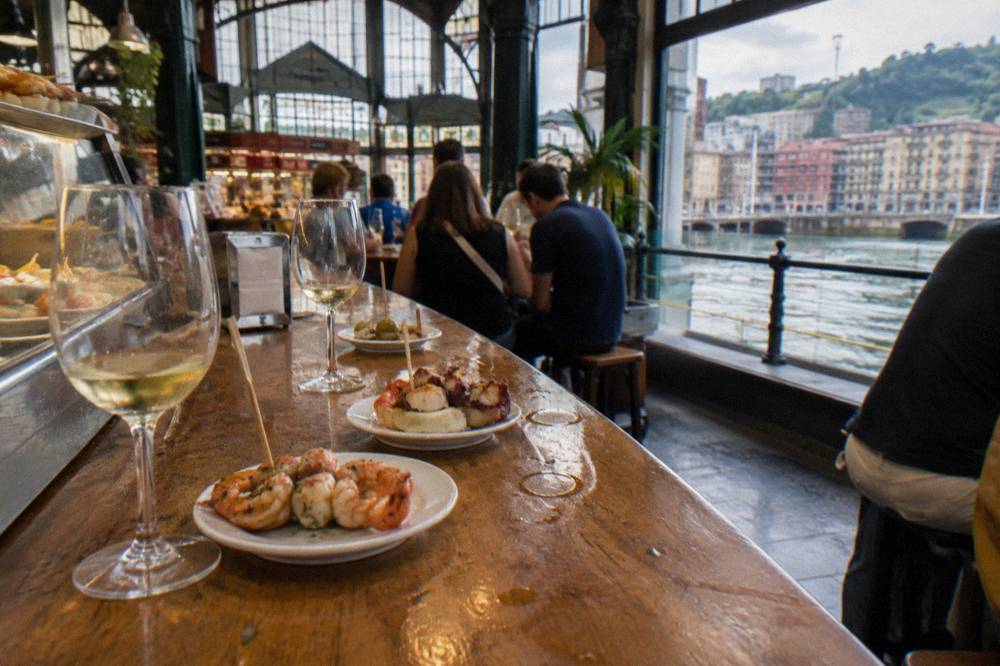
The pintxo question deserves its own sentence because it is the most common confusion. Anyone telling you pintxos come free with a drink is describing a specific bar's occasional offer, not a citywide rule. Budget for them or skip them, but do not plan a free lunch around them.
What you are paying for, when you do pay, is the edible half of the market. The stalls sell fresh produce, fish, meats and breads; the bars sell pintxos and drinks. None of that is wrapped into a ticket or a package. You hand over money only at the moment of purchase, stall by stall, which keeps a free visit honest: nothing is compulsory, and nothing is hidden.
To place the market's paid items in the wider picture of a Bilbao day, the pattern repeats across the city's attractions. The Guggenheim's exterior, including Puppy and Maman, is free to see while the galleries cost 15 euros for adults. The Artxanda viewpoint is free to walk up to while the Funicular de Artxanda charges 3.50 euros one way, 6 euros return. The Vizcaya Bridge is free to look at from the street while the walkway costs 11 euros and the gondola crossing 0.60 euros. The market follows the same logic at a smaller scale: the space is free, the product is not.

The table below keeps the split straight for the market itself and the sights around it, with euros stated only where a price is actually charged.
| Item | Free or paid | Detail |
|---|---|---|
| Market entry | Free | Always, public market hall |
| Browsing stalls | Free | No purchase expected |
| Pintxos | Paid | Not free, price set per bar |
| Drinks and produce | Paid | Stall by stall |
| Guggenheim galleries | Paid | 15 euros adults, under 18s free |
| Artxanda funicular | Paid | 3.50 euros one way, 6 euros return |
| Vizcaya Bridge walkway | Paid | 11 euros, gondola 0.60 euros |
A free-visit strategy, if that is the goal, is simple: go hungry for the sights, not the food. Eat beforehand or after, wander the hall, take the riverside, and treat the stalls as the exhibit. For the fuller picture of which sights charge and which do not, the free versus paid Bilbao sights guide breaks down every major attraction the same way this section breaks down the market.
Where Is It And How Do You Get There On Foot?
The market is in the Casco Viejo, Bilbao's old town, standing directly on the Nervion ria riverside. On foot from the historic quarter it needs no transport at all: the Siete Calles run down toward the water and the market sits at the river end. From Plaza Arriaga, the square where most Old Town walking tours meet, it is a short walk along the riverside.
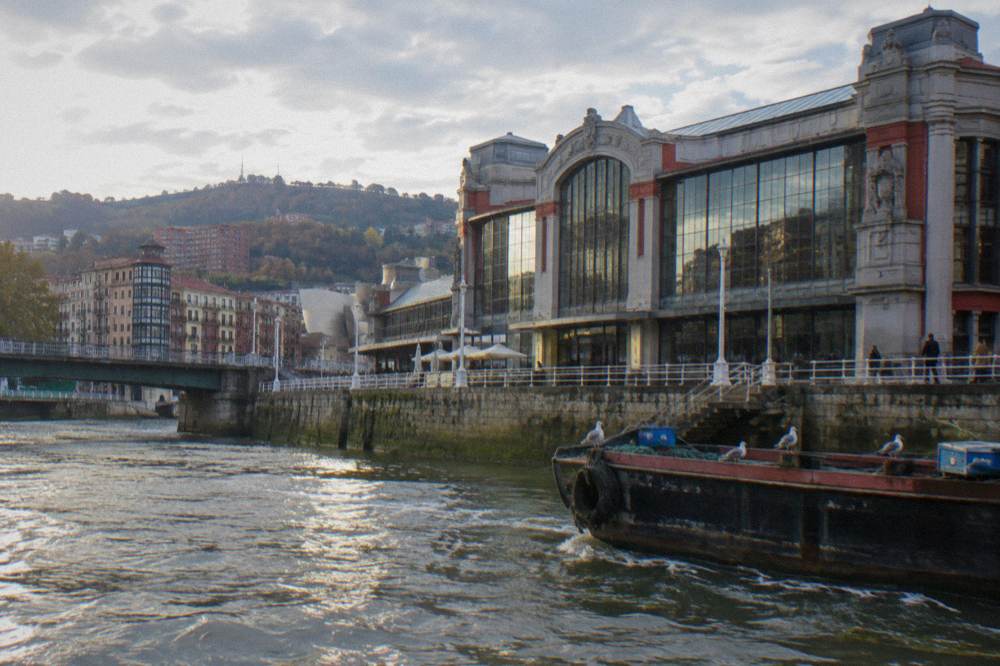
Getting the geography straight helps more than any directions list. The Casco Viejo is the compact historic core on the east bank of the ria, and the market occupies a prime riverside position within it, next to the San Nicolas Church area and the water itself. The Siete Calles, the old streets that give the quarter its character, all drain toward this river edge. If you can find the water, you can find the market; it is the big hall on the riverbank in the old quarter.
The reference points that cost nothing and orient you for free: Plaza Arriaga and the Arriaga Theatre sit at the head of the old town, Paseo del Arenal runs along the river nearby, and Plaza Miguel de Unamuno lies inside the quarter. All are public space. Walking among them is the standard shape of an old-town visit, and the market is simply the riverside stop at the end of it.
Two caution notes on "how to get there". Second, on foot is genuinely the practical answer for most visitors, since the market sits inside the same quarter as the city's main free sights. The free walking tours in Bilbao guide lists where each of the 18 free walks meets, and Plaza Arriaga, a short walk from the market, is the most common of those meeting points.
For visitors combining the market with the modern side of the city, the riverside path west leads toward the Abandoibarra area and the Guggenheim, a free riverside walk end to end. That direction needs no ticket either: the path itself is public, the bridges on the way, including Zubizuri and Puente de la Salve, are free to cross on foot, and the outdoor sculptures around the museum are free to see. The market is therefore a natural start or finish of a free riverside route, not an isolated stop.
When Is The Market Busiest?
Mercado de la Ribera publishes no data on its busy or quiet hours, so no reliable times can be given here. Check the market's own page before you go. If the market feels crowded when you arrive, the surrounding Casco Viejo offers free alternatives that need no timing at all: the Siete Calles, Plaza Nueva, Paseo del Arenal and the riverside walk along the Nervion ria are all open public space.
That honest blank is worth a paragraph of its own, because most market guides float confidently about early mornings and lunch rushes. A visit that treats timing as flexible, and treats the market as one stop among several free ones nearby, cannot be ruined by arriving at the wrong hour.
The buffer around the market is generous. If the hall is shut or heaving, the Siete Calles, Plaza Nueva, the Paseo del Arenal and the riverside walk are all free and all immediately adjacent. This is the real advantage of the market's position: it sits inside a dense cluster of free public space, so no single opening hour gates your day. The same cannot be said of the paid sights, where the Guggenheim's galleries, for instance, open Tuesday to Sunday from 10:00 to 19:00 and close on 25 December and 1 January, hours that do gate a visit.
Seasonal timing is a different question and partly answerable. The city's festival calendar matters: Aste Nagusia ran from 22 to 30 August 2026 and has ended for the year, a period when the whole city, old town included, was at its fullest, with most concerts, parades and fireworks free and open to all. Looking forward, the Christmas lights are reported in the press to switch on in late November, with a market at Parque de Dona Casilda, but those dates are not confirmed officially, and the stalls, rink and slide within it are paid with no prices published. Viewing the lights is free; that much is solid.
For a free visit specifically, the quiet-finding strategy is the same as the timing strategy: go with fallbacks. Walk the quarter first, enter the market when you reach it, and let the riverside absorb whatever crowd level you find. It costs nothing to be flexible when every alternative nearby is also free.
Which Free Walks Start Or Finish At The Market?
One walk here of 18 meets at the market itself: Unfiltered Stories, 2 Hours 15, listed on freetour.com, rated 10 out of 10 across 59 reviews shown on its freetour.com listing, running 2 hours 15 minutes in Spanish, guided by Hugo Benalcazar and Paola. No walk's route beyond its meeting point is published, so no claim is made that any walk enters, tours or finishes inside the market.
That freetour.com listing is the direct link between the market and the free-walk scene, and it is the only meeting point among the 18 walks that names the market. It runs in Spanish, so English speakers should read its listing carefully before reserving. The rest of the Old Town walks meet a short walk away at Plaza Arriaga, and the table below gives their exact meeting points as the listings state them, with no route claims attached.
| Walk | Platform | Meets at | Language | Duration |
|---|---|---|---|---|
| Unfiltered Stories, 2 Hours 15 | freetour.com | Mercado de la Ribera | Spanish | 2 hours 15 minutes |
| Basque Free Tours, Old Town | GuruWalk | Plaza Arriaga, in front of the Arriaga Theatre | English and Spanish | 2 hours |
| Radio Guide Included, 2 Hours 30 | GuruWalk | Plaza Arriaga, in front of the Arriaga Theatre | English and Spanish | 2 hours 30 minutes |
| English Local Walk, 2 Hours 30 | GuruWalk | Plaza Arriaga, back facade of the Arriaga Theatre | English | 2 hours 30 minutes |
| Seven Streets Anecdotes | GuruWalk | Plaza Arriaga, in front of the Arriaga Theatre | Spanish | 2 hours |
| Old Quarter Secrets, French Spoken | GuruWalk | San Nicolas Church, main entrance | Spanish and French | 1 hour 45 minutes |
The two English-capable GuruWalk options nearest in spirit to a market-and-old-town visit are worth naming with their figures. The flagship, Basque Free Tours, Old Town, is rated 4.78 out of 5 across 13,154 GuruWalk reviews, a count that covers all its languages, and meets at Plaza Arriaga, in front of the Arriaga Theatre. Radio Guide Included, 2 Hours 30, by SPAIN FREE TOURS, is rated 4.64 out of 5 across 1,788 GuruWalk reviews, runs in English and Spanish, and meets at the same spot. Both are free, pay what you want, reserved through their GuruWalk pages.
A practical way to combine walk and market: reserve a morning walk that meets at Plaza Arriaga, and visit the market before or after using the short riverside walk between the two. Nothing in that plan requires a ticket anywhere, and both halves sit in the same quarter.
For visitors who prefer the modern side, the early pairing above offers a contrast: an English-language local walk by Anglotourismo, rated 4.76 out of 5 across 392 GuruWalk reviews, and a Guggenheim-and-new-Bilbao walk by Basque Free Tours BILBAO, rated 4.83 out of 5 across 1,533 GuruWalk reviews, both meeting in the old town or at Plaza Arriaga and running 2 hours 30 and 1 hour 45 respectively.
Mistakes That Trip People Up At The Mercado De La Ribera
The recurring mistakes are simple: assuming free entry to Mercado de la Ribera means a free lunch, expecting the Thursday pintxo-pote to cost nothing when pintxos and drinks are always paid, and confusing the market's free entry with the paid interiors nearby, like the Catedral de Santiago at 10 euros, which quietly misprices the whole day.
The first mistake is planning a free lunch. Pintxos are not free, no bar in the market is known to give them away, and the Thursday pintxo-pote tradition is a paid deal, not a giveaway. A visitor who arrives hungry expecting complimentary food leaves either disappointed or paying prices they had not budgeted. The fix is to treat the market's food as a purchase decision, checked at the counter, and the market itself as the free attraction.
The reliable planning frame is the one above: free entry whenever it is open, public space all around it, and a flexible route so a closed door costs you nothing.
The third mistake is assuming the free walks include the market. The only connection is a meeting point: Unfiltered Stories meets at Mercado de la Ribera per its freetour.com listing. No walk's route is published beyond its meeting point, so no walk should be booked on the belief that it tours the hall or finishes inside it. Reserve a walk for its own figures, rating, language, duration and meeting point, and visit the market under your own steam.
The fourth mistake is mispricing the neighbourhood. The old town's streets, squares and riverside are free, but the Catedral de Santiago charges 10 euros for tourist visits, and the Guggenheim's galleries cost 15 euros with no general free day, even though its exterior, Puppy and Maman are free to see. A visitor who lumps "the old town is free" into "everything in the old town is free" will meet a ticket booth twice. Keep the free-versus-paid split in mind and the day stays cheap and honest.
Common Questions About The Mercado De La Ribera
Is Mercado De La Ribera Free To Enter?
Yes, always. The hall is a public market in the Casco Viejo and entry is free at any time it is open, with no ticket, door fee or minimum purchase. The only money you spend is on whatever you buy from a stall or bar inside.
Do You Need A Ticket For Mercado De La Ribera?
No. No ticket exists for the market hall itself. Booking only enters the picture if you reserve a free walking tour separately, and the one walk that meets at the market, Unfiltered Stories, is reserved through its freetour.com listing.
Are Pintxos Free At The Market?
No, pintxos are a paid item at Mercado de la Ribera and everywhere else in Bilbao. Check prices at the counter rather than expecting a citywide figure.
What Are The Mercado De La Ribera Opening Hours?
Opening hours for the market are not shown here, so check the Mercado de la Ribera's own page before you go. Entry is free whenever the hall is open. Confirm times locally or on the city's own listings before planning a tight schedule around a visit.
Which Free Walking Tours Meet At Mercado De La Ribera?
One walk here of 18 meets there: Unfiltered Stories, 2 Hours 15, listed on freetour.com, rated 10 out of 10 across 59 reviews shown on its freetour.com listing, running in Spanish. The other Old Town walks meet at Plaza Arriaga, a short walk away.
Can You Visit The Market Without Buying Anything?
Yes. Browsing is normal in a working market and nothing requires a purchase. Walk the aisles, look at the produce displays, then step out to the free riverside on the Nervion ria, which runs directly past the hall.
The market rewards exactly the kind of visit worth building a day around: free entry, honest paid parts, and a dense cluster of public space on every side. For the wider picture, turn to Free Things To Do In Bilbao for every free sight in the city and all 18 free walking tours across GuruWalk and freetour.com, each with its meeting point, language and rating stated plainly. The city's own visitor resources, including the official Biscay tourism pages and the Bilbao city site, carry the practical details that change seasonally. Confirm those details there before you go.