Is Gaztelugatxe Free?
San Juan de Gaztelugatxe is free to visit, but on controlled-access days you must reserve a free ticket online first. Here is how the rule works and what still costs money.
In Short
Yes, San Juan de Gaztelugatxe is free to visit. The catch is that on controlled-access days set by the official 2026 calendar you must reserve a free ticket online and show it at the access point, and a daily cap of 1,462 people applies. On all other days access is free without a ticket. The nearby car park is paid, and there is no entry fee.
This question sits inside the Gaztelugatxe free ticket rules guide, which covers the full day-out planning picture.
Quick Facts
| Question | Answer |
|---|---|
| Is entry free? | Yes, no entry fee on any day |
| When is a ticket needed? | Only on controlled-access days in the official 2026 calendar |
| How much is the ticket? | Free, reserved online in advance |
| Daily cap on controlled days | 1,462 people |
| What else costs money? | The nearby car park |
| Days reserved for local celebrations | 24 June, 31 July, 29 August, 31 August, 30 December |
Is Gaztelugatxe Free?
Yes, entry to San Juan de Gaztelugatxe is free on every day of the year, with one condition attached: on controlled-access days of the official calendar you must reserve a free ticket online before you go and show it at the access point. On all other days you simply walk up without booking anything. The daily cap on controlled days is 1,462 people, and there is no entry fee at any time.
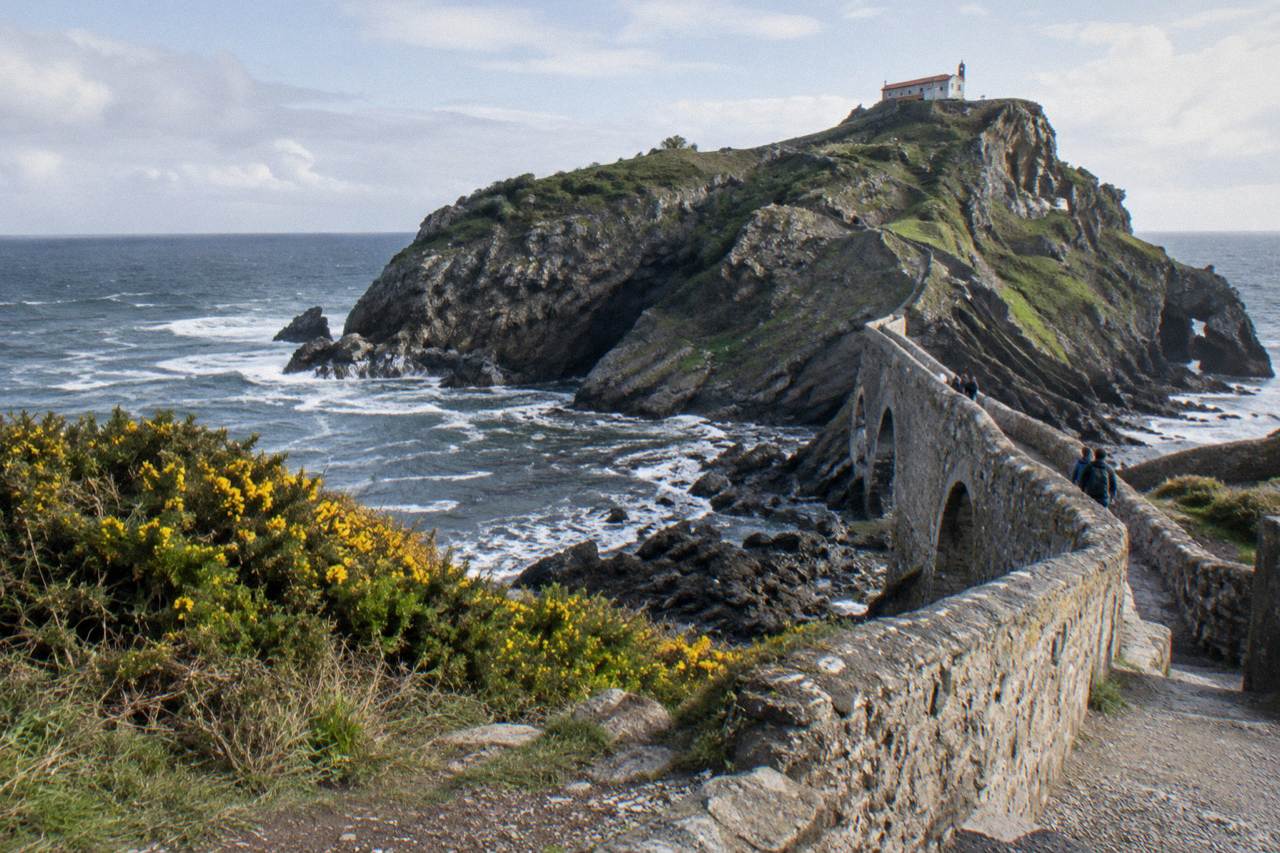
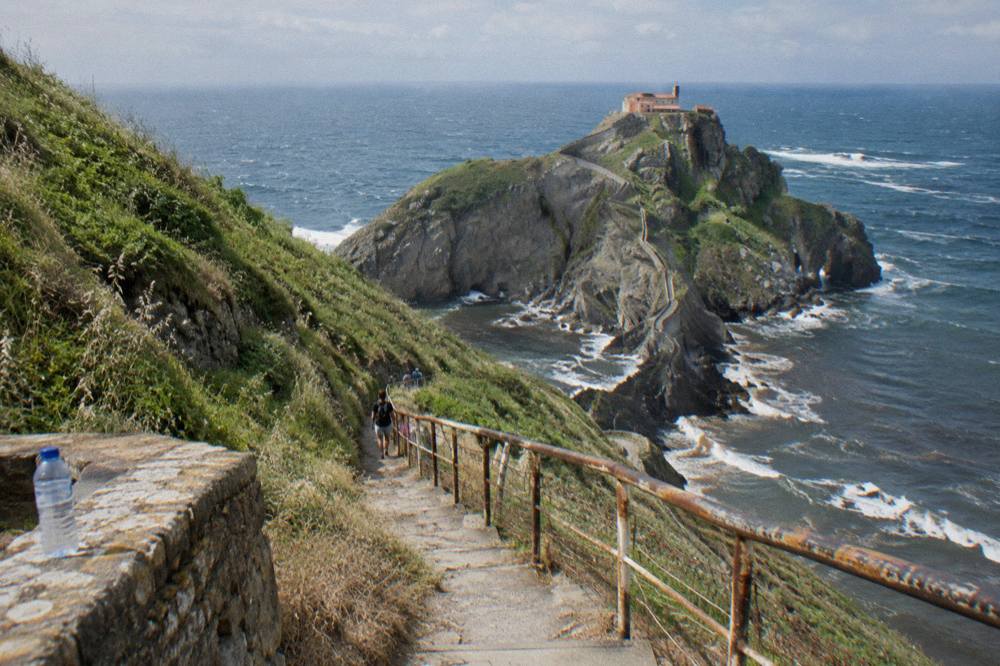
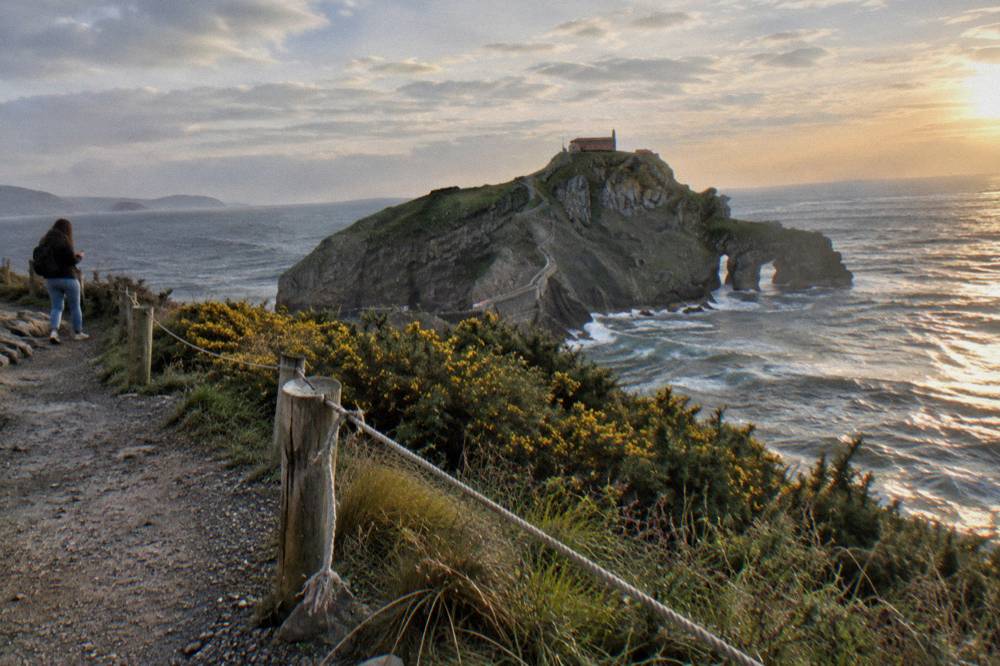
That single sentence carries the whole answer, but the condition is where almost every confusion starts, so it deserves unpacking properly. The site, a rocky islet off the Bizkaia coast topped by a hermitage and reached by a long stone footbridge and staircase, is managed by the Diputación Foral de Bizkaia. The regional authority introduced controlled access to manage crowding, and it publishes a colour-coded calendar each year that splits days into controlled days, when the free online ticket is compulsory, and ordinary days, when access is open and no booking is needed.
The practical consequence for a visitor is simple. Check the official calendar before you travel, and if your date is a controlled day, reserve the free ticket online and carry it with you. If your date is not on the controlled list, you go without booking. The exact list of controlled days is published by the authority as a calendar rather than plain text, so the reliable move is always to read the official access page rather than a summary written months earlier. The one page that matters is the authority's own: the official Gaztelugatxe access page on bizkaia.eus.
There is also a smaller calendar of days that belongs to the local community rather than to tourists. On 24 June, 31 July, 29 August, 31 August and 30 December the site is reserved for local celebrations, and visitors are advised not to come on those dates. That is a different thing from the controlled-access regime: the controlled days are about crowd caps and free tickets, while the celebration days are about respect for the local festivities.
One more boundary worth drawing early: free entry means the hermitage islet and its access paths cost nothing, and there is no entrance charge of any kind. The nearby car park is a separate, paid operation, and the coastal drive out from Bilbao is your own transport cost. Nothing about the free ticket regime changes those facts, and the sections below take each piece in turn.
When Does Entry Need A Ticket?
A ticket is needed only on controlled-access days set out in the official 2026 calendar. On those days you reserve a free ticket online, and access points operate from around 10:00 to 19:00 with the 1,462-person daily cap in force. On every day outside that calendar, access is free and no reservation of any kind is required. The calendar is published by the Diputación Foral de Bizkaia.
The authority refreshes the calendar for the year ahead and publishes it as a colour-coded schedule rather than a written list, so check the controlled days on the official access page at bizkaia.eus/en/gaztelugatxe before you set out. A day that was open last year can be a ticketed day this year, so the check is worth doing every time, not once.
What the ticket actually is matters too. It costs nothing. It is a reservation mechanism, not a revenue mechanism, and its only purpose is to spread visitors across the day and keep the total inside the cap. You reserve it online, you receive it, and you show it at the access point when you arrive. On controlled days the access points run from roughly 10:00 to 19:00; outside that window on a controlled day there is no entry, which is a different situation from an ordinary day when the paths are simply open public access.
The mistake people make is treating the regime as either always-ticketed or never-ticketed, and both readings are wrong. Writing "no reservation needed" without the controlled-day condition is inaccurate, and so is claiming you must always book. The accurate statement is the conditional one, and it never changes: free entry every day, free ticket on controlled days only, cap of 1,462 people on those days.
Weather is a separate layer again. Coastal exposure means access can depend on conditions, and storm closures are handled operationally rather than through the ticket calendar. The official page is also the place where any weather-related closure is announced, which is one more reason to read it close to your travel date rather than weeks ahead.
If your date turns out to be a controlled day and tickets are gone, the surrounding coast does not close. Bakio, the seaside town nearest the site, is free public space, as are the beaches and trails of the wider Urdaibai biosphere area. The islet itself is the only part governed by the ticket.
Where Is The Official Booking Page?
The official access and booking page is the Bizkaia authority's own Gaztelugatxe page at bizkaia.eus. It carries the 2026 controlled-access calendar, the free ticket reservation, the daily cap details and any operational notices such as weather closures. It is the only page to trust for the ticket, and any third-party page reselling or explaining the rules is secondary to it.
The full address is bizkaia.eus/es/gaztelugatxe. That page, run by the Diputación Foral de Bizkaia, is where the colour-coded calendar lives and where the free reservation is made. Be careful with lookalike domains: some Gaztelugatxe web addresses are parked or otherwise unreliable hosts and should never be used for booking. A web address that loads successfully is not proof it is the real one, so typing the authority's domain directly is the safe habit.
Before reserving, the page answers the questions this article cannot: whether your specific date is controlled, what time slots remain, and whether any notice about reduced access is in force. The reservation itself is free, and no payment detail should ever be requested for the access ticket, because the ticket has no price. If a page asks for money for Gaztelugatxe entry, it is not the official one.
A practical sequence looks like this. Open the official page, find your date on the calendar, and if it is controlled, complete the free reservation and keep the ticket accessible on your phone for the access point. If the date is not controlled, you are done. Then check the same page once more a day or two before travel for weather or operational notices, since those can change independently of the calendar.
The paid parts of the trip do not live on that page, which is the next thing to get straight.
What Else Costs Money On The Trip?
Entry is free, but the trip is not automatically free. The nearby car park is paid, and your transport out from Bilbao, whether fuel, bus or a tour, is a cost you bring with you. Nothing else at the site charges: no entrance fee, no ticket price, no charge for the paths. The two things that commonly surprise visitors are the car park and the assumption that a free ticket means a paid tour is required. It is not.
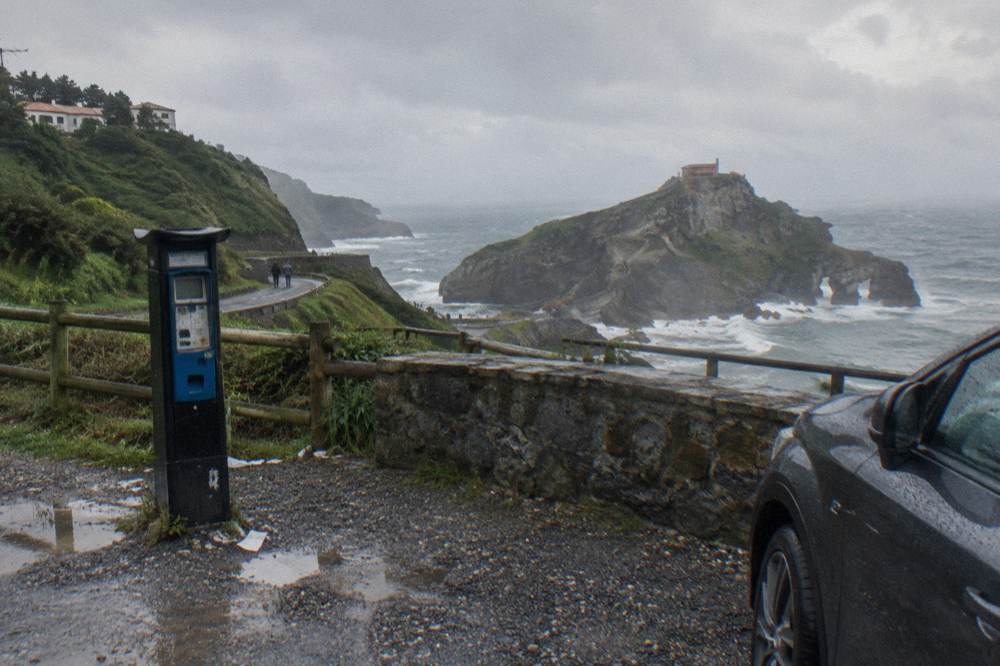
The car park is the clearest paid item. The car park sits near the access to Gaztelugatxe and operates as a separate commercial service, so parking is paid separately; the current rate is posted by the car park itself. Budget for it if you drive, and treat any number quoted elsewhere with caution unless it comes from the operator or the authority directly.
Getting there is the other cost. Gaztelugatxe sits on the coast beyond Bakio, roughly half an hour's drive from Bilbao, and however you travel, that transport is yours to pay for. Bus fares on the regional network are paid, so check the operator for the coastal route fare when planning your trip. Combining the coast with a paid excursion is an option some visitors take, and that is a commercial choice, never a requirement for access.
It helps to place Gaztelugatxe alongside Bilbao's other famous free-versus-paid splits, because the pattern repeats across the region and catching it early saves money. The table below compares the site with nearby attractions where a free element sits beside a paid one.
| Place | Free part | Paid part |
|---|---|---|
| San Juan de Gaztelugatxe | Entry every day, free ticket on controlled days | Nearby car park |
| Vizcaya Bridge (Puente Colgante) | Looking at the bridge from the street | Walkway 11 euros, gondola 0.60 euros |
| Artxanda viewpoint | Walking up, public paths | Funicular 3.50 euros one way, 6 euros return |
| Guggenheim Museum Bilbao | Exterior, Puppy, Maman, riverside | Galleries 15 euros for adults |
Those paid figures come from the operators' own pages: the bridge tariffs are on the bridge operator's tariff page and the funicular fares on the funicular's official price page. The bridge operator also currently runs its lift at reduced hours and 50 percent capacity after a technical incident, a detail worth knowing if that crossing is on your list.
The short version for Gaztelugatxe alone: the visit costs nothing, the parking costs something, and the journey costs whatever your transport costs. Nobody can sell you entry, because entry is not for sale.
Which Free Walking Tours Pass Nearby?
No free walking tour in Bilbao covers Gaztelugatxe. The 18 free walking tours listed across GuruWalk and freetour.com all operate in Bilbao itself, in the Casco Viejo, the modern riverside districts and the city's parks and squares. You reach the coastal islet independently, by car or regional transport; no free walking tour in Bilbao runs to it.
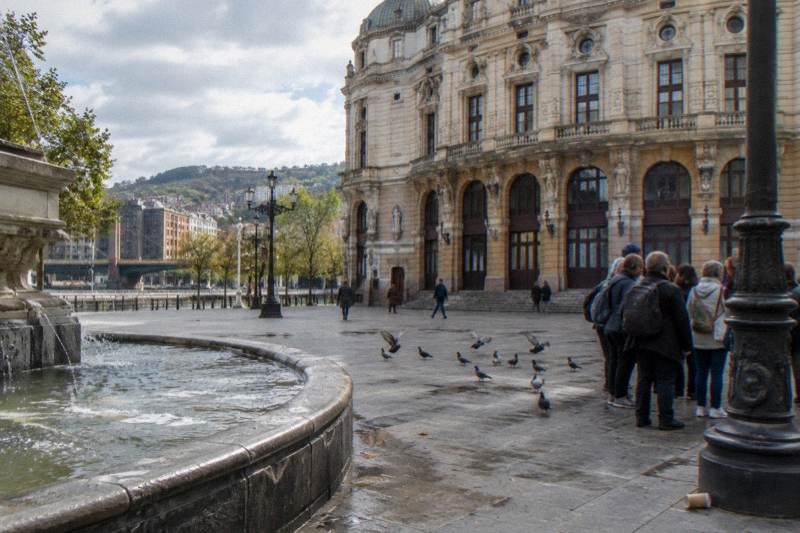
That said, the city walks pair well with a coast day, and the strongest English-language option is the flagship Old Town walk. Basque Free Tours, Old Town is run by Basque Free Tours BILBAO on GuruWalk, meets at Plaza Arriaga, in front of the Arriaga Theatre, and covers the Casco Viejo and Old Town category. It runs two hours in English and Spanish, is free, pay what you want, and is rated 4.78 out of 5 across 13,154 GuruWalk reviews, a count that covers all its languages. Reservations happen on its own GuruWalk page.
A second English option in the same neighbourhood is the English Local Walk, 2 Hours 30 by Anglotourismo, meeting at Plaza Arriaga, back facade of the Arriaga Theatre, rated 4.76 out of 5 across 392 GuruWalk reviews. For a different angle on the city, the Secrets Walk, English And French by Nuria meets at Moyua Square, Iruna bar entrance and is rated 5 out of 5 across 20 GuruWalk reviews, a small pool but a perfect one. Each is free, pay what you want, reserved on GuruWalk.
The freetour.com side of the 18 walks adds walks like Unfiltered Stories, 2 Hours 15, which meets at Mercado de la Ribera, is listed on freetour.com, and is rated 10 out of 10 across 59 reviews shown on its freetour.com listing. The scale there is out of 10, not out of 5, and the two platforms' ratings are never converted into each other.
For structure on a combined trip, one pattern works well: a free city walk on the day you arrive or the evening before, then the coast on a separate morning, checking the Gaztelugatxe calendar the night before. If you want more depth on the city's no-cost side, the Free Things To Do In Bilbao home page collects the full picture, and the free versus paid Bilbao sights guide breaks down every attraction with a paid component.
Mistakes That Trip People Up At Gaztelugatxe
The recurring mistakes are treating a controlled day as an open day and arriving without the free ticket, trusting a lookalike booking site instead of the authority's own page, assuming the whole trip is free because entry is, and showing up on a local celebration date expecting a normal visit. Each mistake is avoidable with one calendar check and one official link, and none of them costs money to fix.
The first mistake is the calendar itself. Visitors read that access is free, skip the reservation step, and find the access point closed to them on a controlled day. The fix is to read the official calendar for your exact date, not a blog summary, and to reserve the free ticket if the date is controlled. The cap of 1,462 people means even reserved visitors do best arriving inside their slot.
The second is the lookalike domain problem. Gaztelugatxe's popularity has produced parked and imposter sites whose names resemble the real authority page. If a site asks for payment for entry, it is wrong, because the ticket is free. Type bizkaia.eus yourself rather than following a search result you have not checked.
The third is budgeting. Free entry coexists with a paid car park and paid transport, and visitors who plan around "it is free" can be caught out by parking alone. The earlier table in this article sets out the split for the site and its neighbours, and the same free-versus-paid pattern repeats at the Guggenheim, where the exterior and its sculptures cost nothing while the galleries charge 15 euros for adults.
The fourth is the celebration dates. On 24 June, 31 July, 29 August, 31 August and 30 December the site is reserved for local festivities and tourists are advised not to visit. That is not a ticketing matter and no reservation changes it; the respectful move is to pick another day.
The last mistake is assuming a paid tour is the only way in. No tour is required, no guide is required, and entry never depends on buying anything. The free walking tours covered earlier are a Bilbao pleasure, not a Gaztelugatxe prerequisite.
Common Questions On This Topic
Is Gaztelugatxe Free To Visit?
Yes. Entry is free on every day of the year, and there is no entrance fee at any time. On controlled-access days set by the official 2026 calendar you must reserve a free ticket online and show it at the access point, with a daily cap of 1,462 people. On all other days access is free without a ticket.
Do You Need A Ticket For Gaztelugatxe?
Only on controlled-access days in the official calendar. Those days you reserve a free ticket online before you go and present it at the access point, where hours run from around 10:00 to 19:00. On ordinary days no booking of any kind is needed.
Where Do You Book The Gaztelugatxe Ticket?
On the Diputación Foral de Bizkaia's own page at bizkaia.eus/es/gaztelugatxe, which carries the calendar, the free reservation and any operational notices. Avoid lookalike domains such as gaztelugatxe.com and gaztelugatxe.net. The ticket is always free.
Is Parking At Gaztelugatxe Free?
No. The nearby car park is a paid operation, and its current price is set by the operator. Entry to the site itself remains free. Your transport out from Bilbao, by car or regional bus, is also a cost you cover yourself.
Are There Days When Tourists Should Not Visit?
Yes. On 24 June, 31 July, 29 August, 31 August and 30 December the site is reserved for local celebrations, and visitors are advised not to come. These are separate from the controlled-access ticket days and no reservation changes them.
Do Any Free Walking Tours Go To Gaztelugatxe?
No. The 18 free walking tours listed across GuruWalk and freetour.com all operate in Bilbao itself, covering the Casco Viejo, the modern riverside and the city's stories. The islet is reached independently by car or regional transport.